There’s a profound resonance in the idea that the “infinite universe” has no center, yet the “observable universe” pivots around the observer—you, me, each of us standing as a singular point of perception in an endless expanse. This rings true, even in a Biblical sense, if you delve deeply enough to weave it into not just your understanding and perspective, but your very essence.
Why? Because scripture often frames humanity as central to creation’s purpose, with the observer reflecting God’s image in a vast, unfolding cosmos. The Bible speaks to this in Genesis 1:27: “
So God created mankind in his own image, in the image of God he created them; male and female he created them.
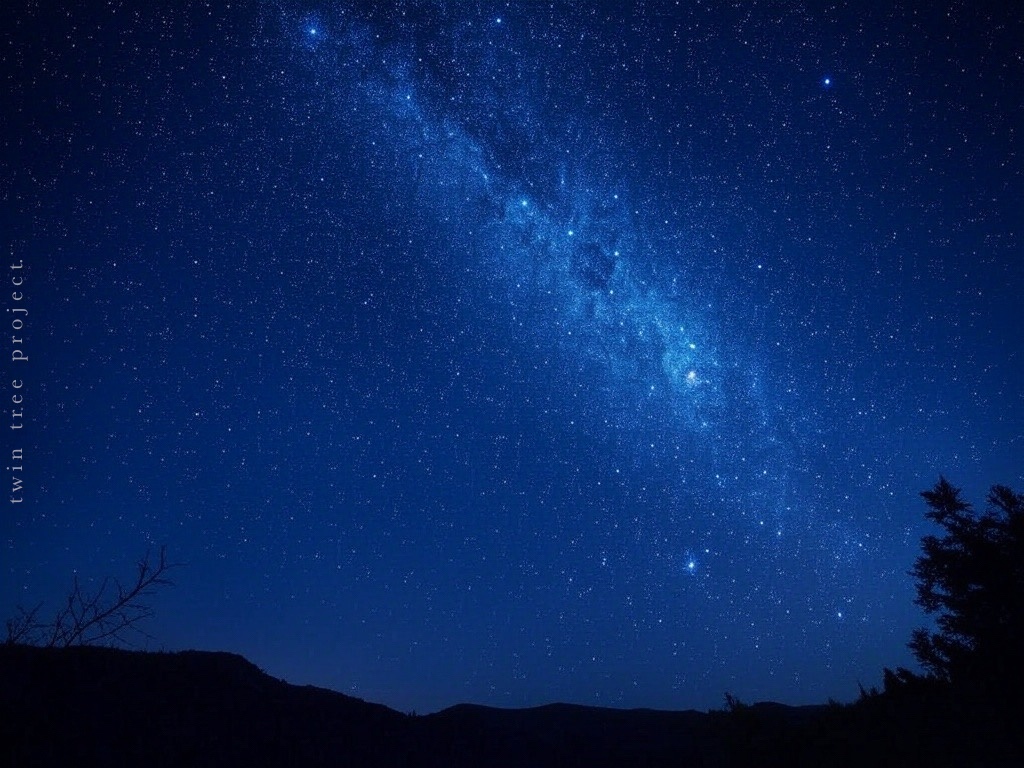
This isn’t just about physical form—it’s about purpose, awareness, and a capacity to perceive and reflect the divine within the grand tapestry of existence. When we gaze at the stars or marvel at a stunning timelapse of the night sky, we’re not just passive spectators; we’re participants in a creation that places us, in a mysterious way, at its heart.
The observable universe—the slice of reality we can see, touch, and comprehend—shifts with our position, making each of us the center of our own cosmic story. As a storyteller, I can only speak from my own experiences, and over time, my understanding has evolved to embrace this spot-on description of our place.
Each of us stands at the heart of our own observable universe, living a singular version shaped by our unique gaze. Think about it—your view of the world, filtered through your memories, beliefs, and senses, is yours alone.
The constellations I see from my backyard might stir awe in me, while someone halfway across the globe might look up at a different sky and feel something entirely distinct. The same sunset can evoke peace in one heart and longing in another. We’re each tethered to our own vantage point, a personal universe defined by what we perceive and how we interpret it.
This realization hit me while resharing a post on X that paired this cosmic insight with a breathtaking timelapse of the stars—swirling, shimmering, a dance of light across the night. The original poster urged us to “view it with a positive attitude,” and I couldn’t agree more.
There’s something inherently uplifting about recognizing our centrality without arrogance, understanding that we’re both insignificant in the grand scale and yet profoundly significant in our individuality. But here’s where it gets even more compelling: if we each inhabit our own observable universe, then the gaps between our realities—our personal experiences, perspectives, and truths—become the spaces where connection either falters or flourishes.
That’s why it’s vital to learn nuance and practice empathy—to bridge those gaps and truly connect. Empathy isn’t just a nice-to-have; it’s a necessity born from this cosmic setup.
In Psalm 139:13-14, David writes:
For you created my inmost being; you knit me together in my mother’s womb. I praise you because I am fearfully and wonderfully made; your works are wonderful, I know that full well.
Each of us is a unique thread in the fabric of creation, “fearfully and wonderfully made,” and yet we’re woven into the same divine tapestry.
If I’m at the center of my observable universe and you’re at the center of yours, our stories might diverge wildly—shaped by different cultures, struggles, joys, and skies—but they’re still part of the same whole. To see that, to feel that, requires nuance: the ability to hold multiple truths at once, to recognize that your sunset isn’t wrong because it differs from mine.
Practicing empathy takes this a step further. It’s not enough to intellectually grasp that your observable universe differs from mine; I have to step into your shoes, imagine your stars, and hear the heartbeat of your experience.
This is where the Biblical call to love comes alive—loving your neighbor as yourself (Mark 12:31) isn’t abstract when you realize your neighbor’s universe is as real and valid as your own. Empathy bridges the gaps, turning a collection of isolated observers into a community of souls reflecting God’s image together.
It’s the difference between staring at the timelapse alone and sharing its wonder with someone else, knowing they might see it through a lens I’d never considered. That timelapse, by the way, was stunning.
Watching the stars sweep across the frame, I felt a quiet awe settle in—a perfect way to close out the evening. It reminded me of how the universe, in all its vastness, still bends toward the observer.
Scientists tell us the observable universe is about 93 billion light-years across, but its center is wherever you stand. That’s not just physics; it’s poetry. It’s grace. It’s a reminder that wonder isn’t out there somewhere—it’s right here, in the act of seeing, feeling, and connecting.
This perspective shifts how we move through the world. If I’m the center of my observable universe, then my attitude, as the original poster suggested, matters.
A positive lens doesn’t erase the dark spots—grief, doubt, or pain—but it frames them within a bigger story of hope. And if you’re the center of yours, then your story matters too.
Nuance lets me see that your hope might look different from mine, and empathy urges me to honor it anyway. Together, we become more than solitary observers; we become co-creators of meaning, stitching our personal universes into something shared.
The #TwinTreeProject, a hashtag I’ve carried into this reflection, feels especially apt here. Two trees, distinct yet intertwined, mirror this dance of individuality and connection.
Spirituality, grace, and wonder—these aren’t just buzzwords; they’re the roots that ground us as we navigate our place in the cosmos. Spirituality invites us to look up and inward, grace reminds us we’re held in the vastness, and wonder keeps us marveling at it all—like that timelapse spinning through the night.
So, next time you watch the stars or scroll past a beautiful timelapse, pause. You’re not just an onlooker; you’re the center of your observable universe, reflecting something divine.
And so is the person next to you. Lean into nuance, practice empathy, and let the gaps between your realities become bridges. Because in this infinite, unfolding cosmos, connection is what makes the view truly stunning.
 The Twin Tree Project