It is almost infuriating to hear people complain about and be angry with the youth of our nation—and the world—today. This has weighed on my heart for quite some time, and I believe it’s time to change the script.
Before you get defensive and begin to respond that the youth are sorry, lazy, greedy, and selfish—and that they have no one but themselves to blame—let me explain my stance:
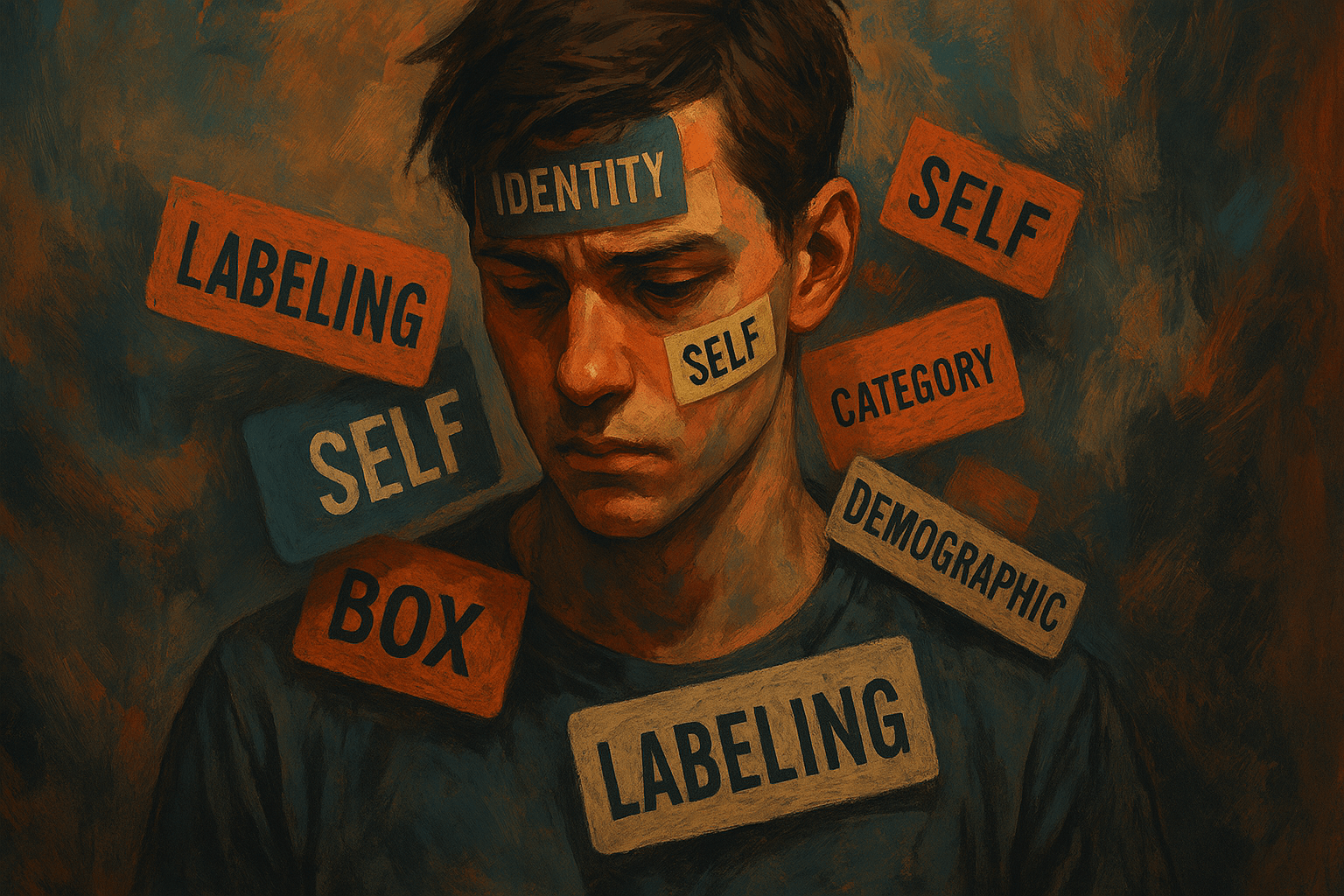
It used to be an insult to be labeled. Now? Labels are a personality.
There was a time when being labeled felt like a dismissal—a lazy attempt to reduce a complex, growing human being into something simple, manageable, and stereotyped. People would bristle at being shoved into a box, especially one they didn’t choose. There was resistance. There was pushback. There was a desire to be seen beyond a category.
Today, it’s not just accepted—it’s celebrated. Labels have become curated identities. Hashtags have become selfhood. And the deeper, more personal journey of becoming who you are? It’s often skipped entirely in favor of fast, external validation.
Young people today have been conditioned to trade complexity for categories and demographics for identity, yet people wonder why today’s young adults and kids feel hollow, perpetually angry, and “confused…”
It’s not a mystery. It’s not a character flaw. It’s not the fault of “this generation.” Or, it shouldn’t be. It’s very clear. It’s the result of a social machine that values marketability over meaning and elevates performance over authenticity.
It’s the result of a system of education that taught an entire generation that who you are is what you appear to be, and that appearance can be optimized, filtered, and fed to the algorithm like currency.
Why shouldn’t young people be hollow, “lazy,” perpetually angry, and confused?
Being labeled used to mean someone didn’t get you. Now people volunteer for it, and not just because they want to. They do it because they’ve been taught to. Because the systems surrounding them—from social media to institutions to peer culture—reward it. Visibility gets likes. Certainty gets applause. Complexity gets overlooked.
So of course people cling to a label. Of course they want to belong somewhere. We all do. But when that longing for belonging is exploited—turned into a checklist instead of a quest—confusion and anger become the natural byproducts.
People rush to fit into demographics like it’s self-discovery, not self-erasure, as though being a young person isn’t confusing and hard enough in and of itself! I’d be perpetually angry and confused, too!
Growing up is already disorienting. It’s already a time of contradictions, of searching, of trying on different pieces of yourself and discarding what doesn’t fit. It’s supposed to be sacred. It’s supposed to be fluid. But when young people are told they must know exactly who they are—and market who they are—before they even have time to breathe, it becomes too much.
Maybe it is time to stop blaming the youth, and start taking accountability for what they’ve been not just allowed, but almost forced, to grow up believing: that their value lives only in identity, and that identity is a checklist. That labeling yourself is liberation, and that fitting into a box is the same as knowing who you are.
These are not beliefs they came up with on their own. These are the fruits of a culture obsessed with external clarity and allergic to inner depth. These are the consequences of abandoning mentorship in favor of metrics, of giving children devices instead of direction, and of praising self-expression while starving them of self-awareness.
Young people today were fed worse lies than our generations before were fed. They weren’t handed truth. Instead they were given algorithms and even more labels than the past offered, and taught NOTHING about character and integrity and the value of “becoming.”
They were taught to declare who they are before they had a chance to discover it. They were taught that performance equals personhood, that visibility equals worth, and that branding yourself is the same thing as knowing yourself. Meanwhile, the old virtues—character, honesty, discipline, humility—were pushed aside as outdated relics.
No wonder they’re angry. No wonder they’re lost. And it’s NOT their fault.
It’s ours.
And until we face that—until we start honoring depth over demographic, soul over slogan, and becoming over branding—we will continue to raise generations who are both visible and invisible at the same time. Loud and unheard. Labeled and still unknown.
And that is the real tragedy.
 The Twin Tree Project