

Quantum mechanics has long challenged our understanding of reality, revealing a world where particles exist in multiple states, observations affect outcomes, and entanglement defies spatial boundaries. Similarly, the Cognitive Theoretical Model of the Universe (CTMU) offers a framework that redefines reality as a self-referential, interconnected system, aligning in surprising ways with the principles of quantumContinueContinue reading “Parallels Between the Cognitive Theoretical Model (CTMU) and Quantum Mechanics”
Tag Archives: metaphysics
Revisiting Simulation Theory Through the Cognitive Theoretical Model (CTMU)

Simulation theory has captured the imagination of many, suggesting that our reality might be an artificial construct, much like a complex computer simulation. While this idea has sparked debate across science and philosophy, the Cognitive Theoretical Model (CTMU) takes a different approach. Rather than proposing that we live in a simulation created by external beings,ContinueContinue reading “Revisiting Simulation Theory Through the Cognitive Theoretical Model (CTMU)”
Time in the Cognitive Theoretical Model (CTMU): Illusion, Reality, or Both?

Time governs every aspect of our lives, from the steady ticking of the clock to the grand cycles of celestial motion. Yet, its nature remains one of the greatest mysteries of existence. Is time a fundamental aspect of reality, or is it merely a construct of perception? The Cognitive Theoretical Model of the Universe (CTMU)ContinueContinue reading “Time in the Cognitive Theoretical Model (CTMU): Illusion, Reality, or Both?”
Complexity and Emergence in the Cognitive Theoretical Model of the Universe (CTMU)

The universe is a masterpiece of complexity, from the intricate patterns in nature to the abstract workings of human thought. Yet, complexity is not random; it emerges from simple underlying principles. The Cognitive Theoretical Model of the Universe (CTMU) takes this concept further, suggesting that reality itself is an emergent system, evolving through self-reference andContinueContinue reading “Complexity and Emergence in the Cognitive Theoretical Model of the Universe (CTMU)”
Perception and Reality: The Role of the Observer in CTMU

Perception shapes our understanding of reality. Yet, the Cognitive Theoretical Model of the Universe (CTMU) posits that this relationship is not one-sided. Reality itself depends on the act of observation, creating a feedback loop between the observer and the observed. This perspective challenges traditional notions of an objective, observer-independent universe, suggesting instead that perception isContinueContinue reading “Perception and Reality: The Role of the Observer in CTMU”
Systems Thinking in CTMU: Why Everything is Interlinked

In our increasingly complex world, the ability to recognize interconnections between systems is vital. The Cognitive Theoretical Model of the Universe (CTMU) builds on this principle, proposing that reality itself is a vast, interconnected system where every part influences the whole. Systems thinking, the practice of understanding how individual components interact within a larger framework,ContinueContinue reading “Systems Thinking in CTMU: Why Everything is Interlinked”
Exploring Interconnectivity: Cognition and the Universe

We live in a world that “requires” us to perceive ourselves as separate from the systems around us, and the Cognitive Theoretical Model of the Universe (CTMU) challenges this notion at its core. It proposes something both profound and transformational: the universe itself is not only interconnected but inherently cognitive. Cognition, in this sense, isContinueContinue reading “Exploring Interconnectivity: Cognition and the Universe”
Common Misconceptions About the Cognitive-Theoretic Model of the Universe (CTMU)
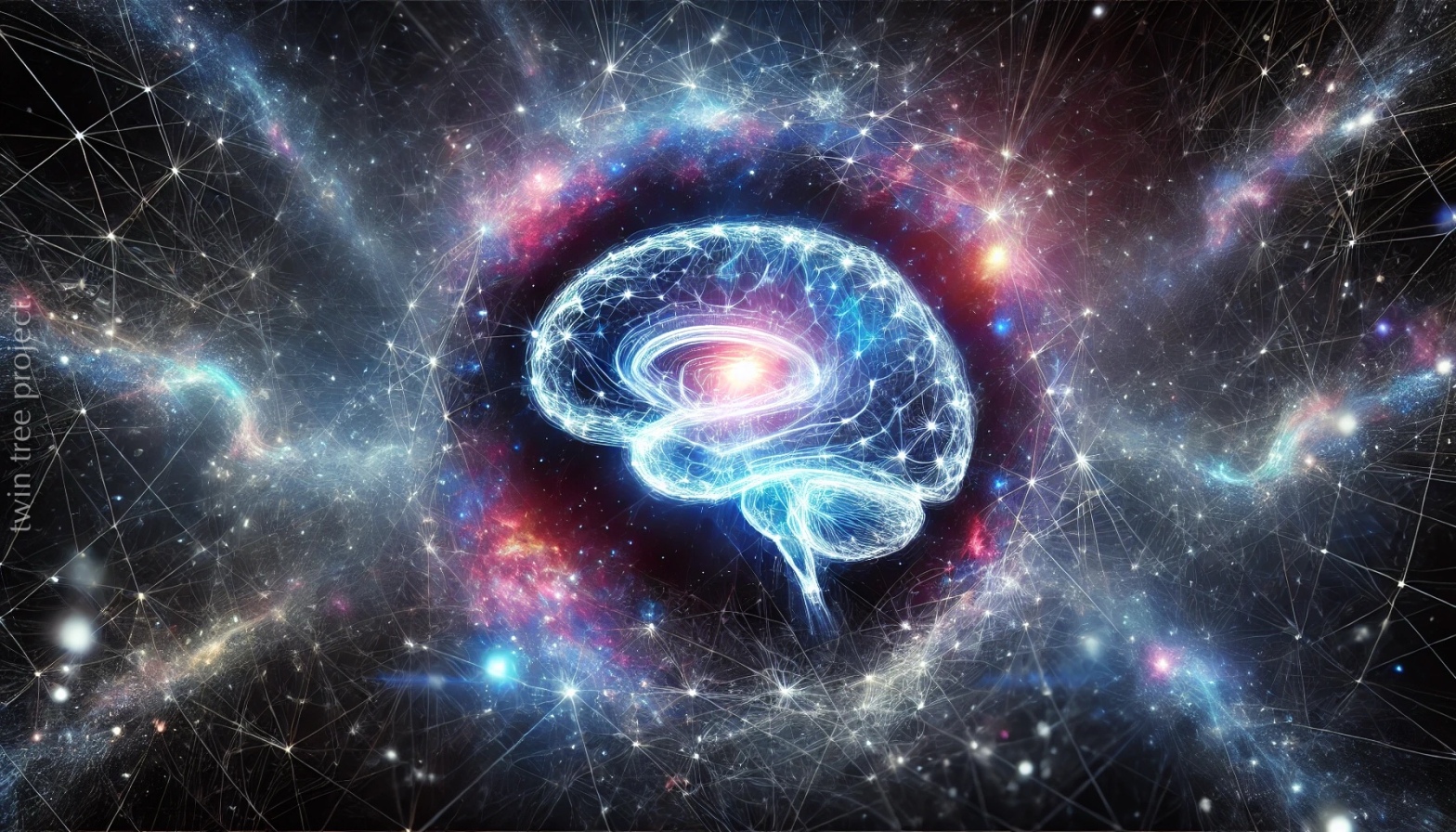
The Cognitive-Theoretic Model of the Universe (CTMU) is a groundbreaking framework designed to unify cognition and reality within a single, cohesive model. By bridging profound philosophical concepts with logical precision, it provides unique insights into the nature of the universe and the role of human cognition within it. As we’ve explored in previous posts inContinueContinue reading “Common Misconceptions About the Cognitive-Theoretic Model of the Universe (CTMU)”
The Universe as a Cognitive Entity (CTMU Series)

Building on our exploration of information theory and its foundational role in the Cognitive-Theoretic Model of the Universe (CTMU), this post delves into the profound idea of the universe as a cognitive entity. If information is the fabric of reality, as discussed in the previous post, then cognition emerges as the process that gives thatContinueContinue reading “The Universe as a Cognitive Entity (CTMU Series)”
Information Theory as the Foundation of CTMU

At the heart of the Cognitive-Theoretic Model of the Universe (CTMU) lies the concept of information. In this framework, information isn’t merely an abstract idea or a tool for communication—it’s the fundamental building block of reality itself. Building on the foundation set in the previous post, The Role of Logic and Language in CTMU, whichContinueContinue reading “Information Theory as the Foundation of CTMU”
 The Twin Tree Project