As the holidays approach, it’s easy to get swept up in debates, stress, or even frustration about what Christmas should be. Some argue over whether to say “Merry Christmas” or “Happy Holidays,” as if one diminishes the other. Others lament its commercialization or shy away from the word entirely, fearing it might offend. But at its heart, Christmas is so much bigger than a single tradition, belief system, or word.
Christmas is about connection. It’s about finding light in the darkest days, celebrating love and togetherness, and embracing the timeless energy that unites us all. That energy—the energy of hope, renewal, and generosity—is what gives the season its magic.
A Holiday of Many Layers
The truth is, Christmas isn’t just one story. It’s a mosaic—a beautiful blending of traditions, beliefs, and cultures that stretch across centuries. Long before the birth of Christ, people celebrated the winter solstice: the longest night of the year, when the promise of returning light gave them hope. Festivals like Yule in the Norse lands and Saturnalia in Rome honored this turning point with fire, feasting, and acts of generosity, celebrating survival and renewal.
Even smaller traditions we cherish today, like stockings and Yule logs, have roots in these ancient celebrations. Norse children left treats for Odin’s horse, Sleipnir, in hopes of gifts—a practice that evolved into today’s stockings. Yule logs, once burned to protect against misfortune and welcome the sun’s return, have become decorative symbols (or even dessert!) that still carry the same energy of warmth and hope.
When Christianity emerged, the story of Jesus—the light of the world, born in a humble manger—folded into these older customs. For Christians, Christmas became a celebration of love, grace, and renewal, with Christ’s birth symbolizing hope in the face of darkness. Yet even beyond the Christian tradition, his story resonates universally: it reminds us of the power of love, kindness, and the belief that light can always return, even in the darkest of nights.
The Spirit Behind Our Traditions
Think about the traditions we hold dear—decorating trees, sharing meals, giving gifts. They aren’t just rituals; they’re acts of connection.
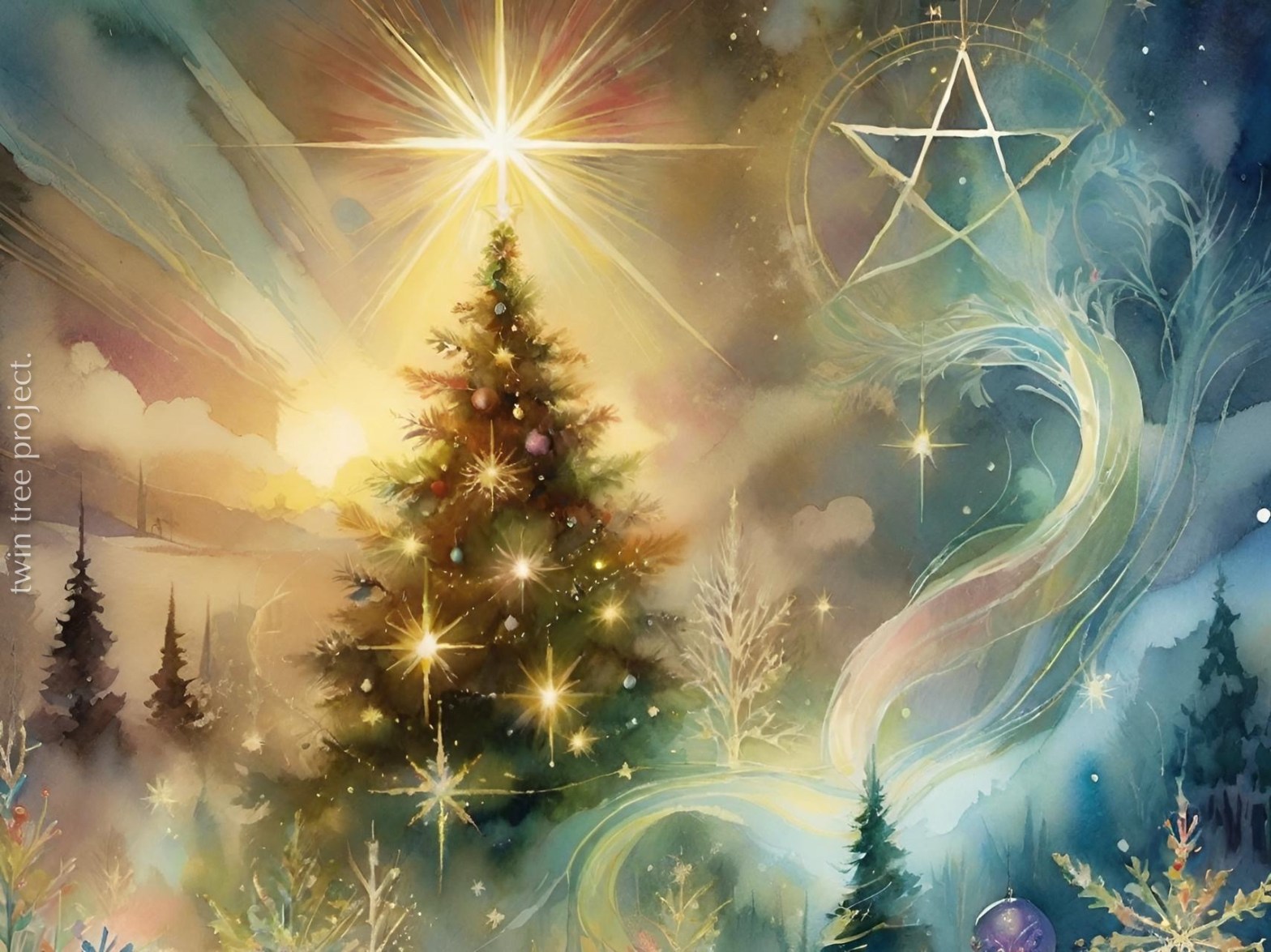
The Christmas tree, for example, predates Christianity. Ancient cultures brought evergreen boughs into their homes during the winter to symbolize resilience and hope. Today, we light them up with strings of light, carrying forward that ancient desire to ward off darkness and celebrate life.
And gift-giving? It’s not just about presents. Each gift is a token of love, thoughtfulness, and connection. Whether you’re wrapping something big or small, the energy behind the act is what matters: the thought, the care, the joy of giving something meaningful.
Even Santa Claus—whether you see him as a childhood fantasy or a symbol of generosity—embodies the spirit of connection. His roots stretch back to Saint Nicholas, a 4th-century bishop known for helping those in need, and even further to pagan winter celebrations where figures of light and generosity brought hope during the darkest time of the year.
But even Santa isn’t without a shadow. In Alpine folklore, his counterpart, Krampus, represents the balance between light and darkness. While Santa rewards the good with gifts, Krampus punishes the naughty, reminding us of the duality present in so many holiday traditions. And yet, the figure of Santa endures, spreading joy, generosity, and hope despite this dark counterpart. It’s a testament to the holiday’s deeper truth: that light and love are most powerful when they shine in the face of fear or adversity.
A Reminder of Shared Humanity
What makes Christmas truly special is how it reminds us of our shared humanity. It’s not confined to one culture or religion; it embodies universal themes of love, light, hope, and the cycles of death and rebirth that connect us all.
When we gather with loved ones, light a candle, or even hum along to a Christmas song, we’re participating in something much bigger than ourselves. We’re stepping into a tradition that spans centuries and continents, rooted in the belief that—even in the darkest nights—there is light.
For Christians, that light is Christ: the embodiment of love and grace. For others, it’s the return of the sun, the warmth of family, or the simple joy of giving. But whatever form it takes, the energy of Christmas reminds us that we’re all part of the same story, bound together by the same need for connection and hope.
Carrying the Light Forward
At its core, Christmas isn’t just a day on the calendar; it’s a state of mind. It’s a moment to reflect on what truly matters—love, kindness, and the joy of being together. And it’s a chance to share that energy with the world, knowing that even the smallest act of kindness can ripple outward in ways we may never see.
So this Christmas, whether you’re lighting a tree, giving a gift, or simply spending time with someone you love, remember: you’re part of something vast and beautiful. The energy of connection, hope, and renewal doesn’t end on December 25th. It’s something we can carry forward every day, creating a world that’s a little brighter, a little warmer, and a lot more connected.
 The Twin Tree Project