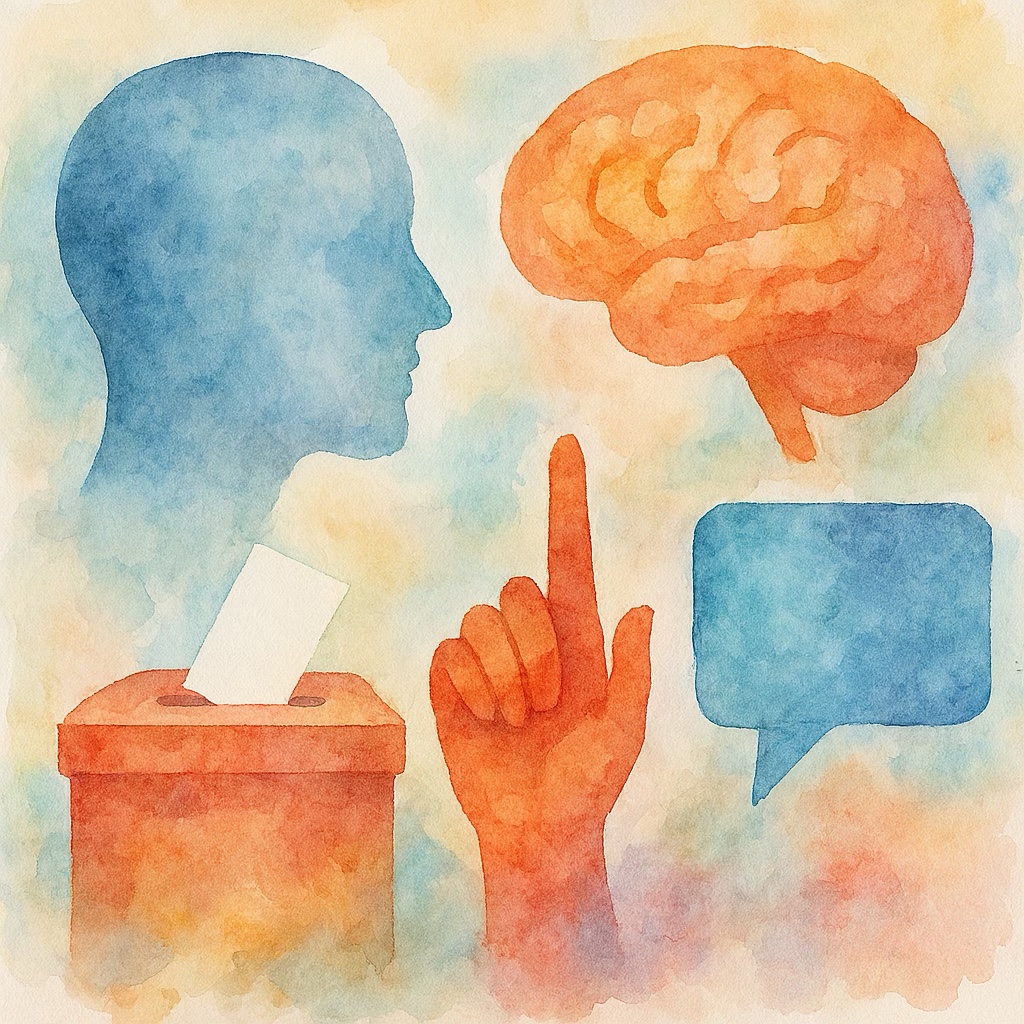
It’s been quite a while since I’ve shared a psychology-related write-up. Recently, I saw a clip of liberal commentary that prompted a realization: even many otherwise balanced, reasonable people don’t fully understand what’s happening in the psyches of those on the radical ends of the political spectrum. And this phenomenon is not confined to oneContinueContinue reading “The Psychology of Political Conviction: Why Facts Often Fail to Change Minds”
Tag Archives: human mind
When Compromise Becomes Complicity: Why Speaking Truth Is No Longer Optional

I saw a post recently about Susan Rice advocating for reeducation camps for those who haven’t adopted her worldview. Why this approach? Because persuasion has failed. When you can’t convince people through reason or evidence, the next step becomes force. This reveals something crucial about the current moment: we are witnessing the breakdown of sharedContinueContinue reading “When Compromise Becomes Complicity: Why Speaking Truth Is No Longer Optional”
The Retardation of Reason

For months, I’ve been struggling with diagnostic fatigue when it comes to this blog. I realized long ago that I speak from upstream of a culture that has deliberately moved downstream and dammed itself there. Only recently did it fully land that this does not render the work pointless. It simply means the audience wasContinueContinue reading “The Retardation of Reason”
Understanding Cognition: How the Mind Processes Reality

In our last post, we explored The Purpose of CTMU: Bridging Cognition and the Universe, discussing how this framework unites thought and existence into a single interconnected system. With this foundation in mind, we can now take a closer look at cognition itself—the mechanism through which the mind interprets and interacts with the universe. IfContinueContinue reading “Understanding Cognition: How the Mind Processes Reality”
The Purpose of CTMU: Bridging Cognition and the Universe
The Cognitive-Theoretic Model of the Universe (CTMU) presents a bold idea: cognition and the universe are not separate, unrelated entities. Instead, they are deeply interconnected, two facets of the same underlying process. This connection lies at the heart of the CTMU and represents its most profound purpose—to bridge the gap between how we think andContinueContinue reading “The Purpose of CTMU: Bridging Cognition and the Universe”
 The Twin Tree Project