There was a moment in my life when I looked at the person I had become and felt a complete disconnect. On the surface, to anyone looking in from the outside, everything seemed fine—more than fine, even successful. But deep down, I knew something was off. I was out of alignment with myself. Especially after my caregiving journey had (finally) come to an end, I felt trapped in a mental version of myself that no longer fit. It was as if I had spent years living in a story that was written for someone else. I had outgrown my own skin, my own identity, yet I had no clear idea of what was next or who I was supposed to be.
That realization hit me hard. It was terrifying because it forced me to face the unknown, to step outside the safe and familiar, even if it felt confining. But it was also liberating. In that moment, I saw the cracks in the foundation, not as flaws, but as opportunities to rebuild, to reimagine who I could become. It wasn’t just a question of “What now?” but a chance to ask myself, “Who do I want to be?” And that question became the spark that ignited my reinvention.
What followed was a journey of reinvention, one that would shape not only who I am today but also the heart of the Twin Tree Philosophy.
The Breaking Point
Reinvention often begins with a fracture—a moment when the life you’re living no longer makes sense. For me, it wasn’t one catastrophic event but rather a series of small, quiet nudges. I felt restless, unfulfilled, and strangely empty, even when I was achieving what I thought I wanted.
I remember standing in the middle of a life I had carefully built and asking myself:
• Who am I beyond the roles I play?
• Am I truly happy, or just comfortable?
• What would my life look like if I gave myself permission to start over?
Those questions weren’t easy to face. But they became the seeds of transformation.
Letting Go of Who I Was
The hardest part of reinvention is letting go of the identity you’ve spent years crafting—the one you’ve invested so much time, energy, and effort into building. For me, this meant releasing old definitions of self and success, outdated beliefs about what I should do and who I should be, and the ever-present fear of disappointing others. It wasn’t just about walking away from certain roles or achievements; it was about unraveling the stories I had told myself for so long, the ones that had kept me feeling safe but stuck.
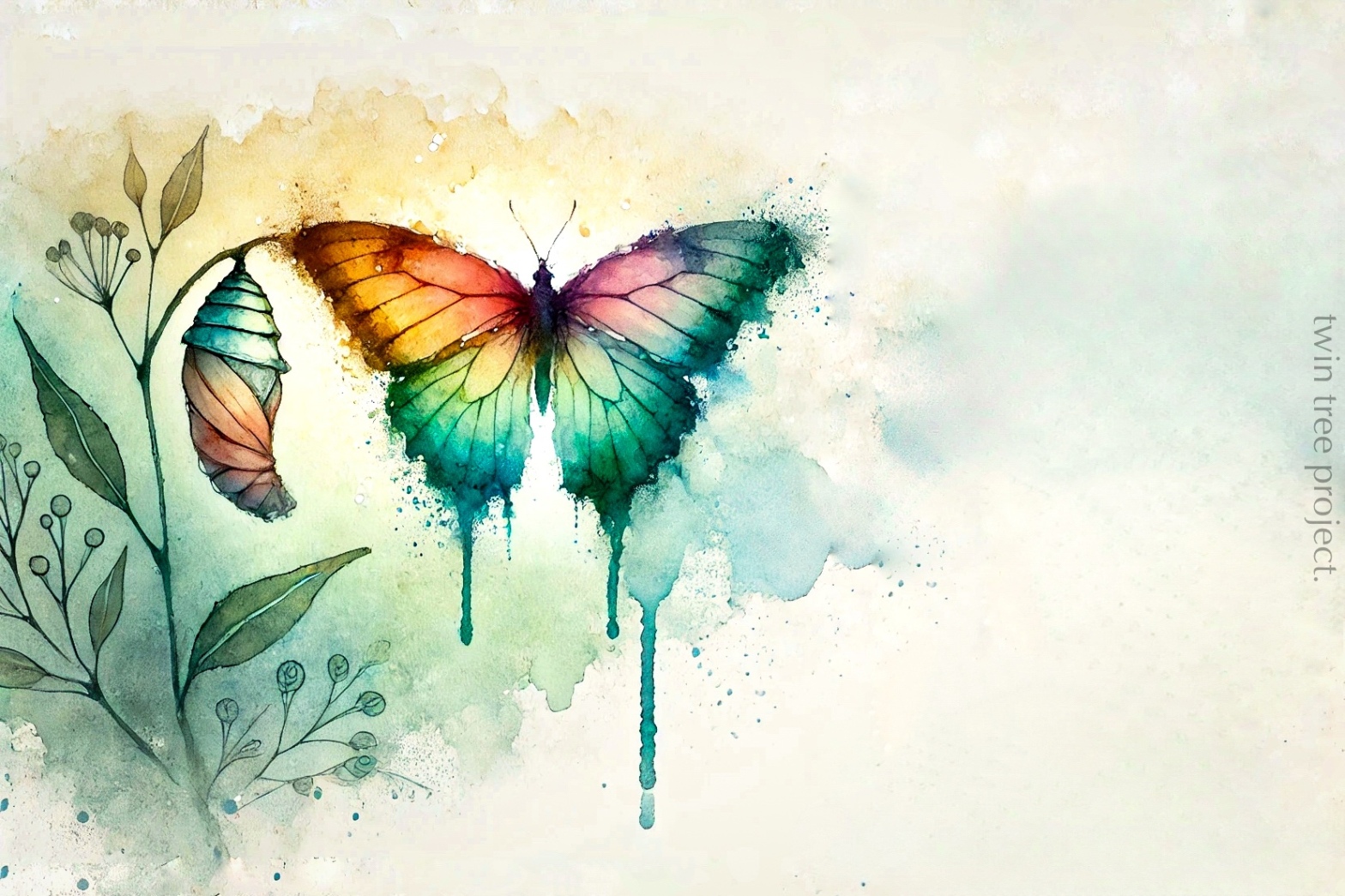
Letting go of that version of myself wasn’t easy. It felt like shedding a layer of skin—raw, vulnerable, and uncomfortable. I had to confront the quiet grief of leaving behind a life I had outgrown, even if I knew deep down it no longer served me. But with every piece I released, I felt a little lighter. Each step forward brought me closer to the person I was meant to become, the person I was rediscovering through the process.
It wasn’t instant. It wasn’t clean. But it was worth it. Letting go made space for something new—a version of myself that felt more authentic, more aligned, and more alive.
Clearing the Space
Clearing the space was both a practical and emotional process. It wasn’t just about decluttering my physical environment—although that became part of it—it was about creating room in my heart and mind for something new to take root. In the Twin Tree Philosophy, this is what I call the pruning phase: letting go of what no longer serves you so that new growth can flourish.
I started with small, tangible actions. I let go of physical objects tied to identities I was no longer attached to—clothes I no longer wore, books that no longer resonated, even work projects that felt like obligations rather than passions. With each thing I released, I felt a sense of lightness, a sense that I was reclaiming space for myself.
But the deeper work was internal. I had to examine the beliefs I was holding onto—the ones that told me who I needed to be to feel worthy, or what I needed to achieve to be successful. These weren’t easy truths to confront. Some of these beliefs had defined me for years. But I began to notice the difference between what felt true and what felt heavy. I asked myself hard questions: “Am I holding onto this because it serves me, or because I’m afraid to let it go?” The answers were often surprising and always clarifying.
Clearing the space also meant learning to sit with the discomfort of emptiness. When you let go of the familiar, there’s a quiet that follows. At first, it felt unsettling, like I was standing in an open field with no clear direction. But in time, I began to see it for what it was: possibility. That empty space was where I could finally plant seeds for the life I wanted to create.
Through this process, I learned that clearing the space isn’t about erasing the past—it’s about honoring it while recognizing that you don’t have to carry all of it with you. Some things belong in the soil, as nutrients for your growth, but not everything needs to come along for the journey. By pruning away what no longer fit, I created the room I needed to truly reimagine my life.
Reimagining My Life
Once I cleared the space, I started asking new questions:
• What brings me joy?
• What do I value most deeply?
• Who do I want to be, not just for others but for myself?
I envisioned a life that felt more meaningful, more aligned with my values. I didn’t have all the answers, but I had a vision. And that vision became my guiding star.
The Power of Small Steps
Reinvention isn’t a grand, sweeping act. It’s a series of small, consistent steps. For me, it started with saying no to things that didn’t serve me and yes to the things that did—whether that was spending time in nature, pursuing creative projects, or simply learning to listen to my own intuition.
I learned to embrace the process, even when it felt messy or uncertain. Some days were harder than others, but every step forward, no matter how small, brought me closer to the life I was creating.
The Birth of Twin Tree Philosophy
As I moved through my transformation, I found inspiration in the natural world—particularly in the image of two trees growing side by side. One tree represented my past: the roots of who I had been, grounding me in my experiences and lessons. The other tree symbolized my future: a towering reminder of who I could become, reaching for the sky.
This image became the foundation of the Twin Tree Philosophy. It taught me that reinvention isn’t about erasing your past but honoring it while embracing your potential for growth.
Lessons from Reinvention
Looking back on my journey, I’ve come to realize a few truths about reinvention:
1. It’s Never Too Late: No matter where you are in life, you have the power to start over.
2. Letting Go is Essential: You can’t create a new life while clinging to the old one.
3. Your Vision Will Evolve: The person you’re becoming will change as you grow. Embrace the fluidity.
4. You Are Your Own Catalyst: No one else can reinvent you. The power is yours.
A Personal Invitation
Reinvention isn’t just my story—it’s a universal experience. We all have moments when we feel called to change, to grow, to become something more. And while the journey can be daunting, it’s also one of the most rewarding gifts you can give yourself.
Twin Tree Project was born out of my own reinvention, and it exists to remind us all that transformation is possible. Whether you’re at the beginning of your journey or somewhere in the messy middle, know this: you are capable of incredible growth.
Your story is still unfolding. Who do you want to become?
We can grow together.
 The Twin Tree Project