There’s a word that seems to get thrown around with reckless abandon every time a disaster strikes or a tragedy unfolds: karma. Whether it’s in reference to a hurricane that devastates coastal communities, wildfires reducing entire towns to ashes, or even broader societal struggles, “karma” is often invoked as a weapon—used to justify suffering, assign blame, or dismiss an opposing perspective.
But how many of us truly understand what karma means?
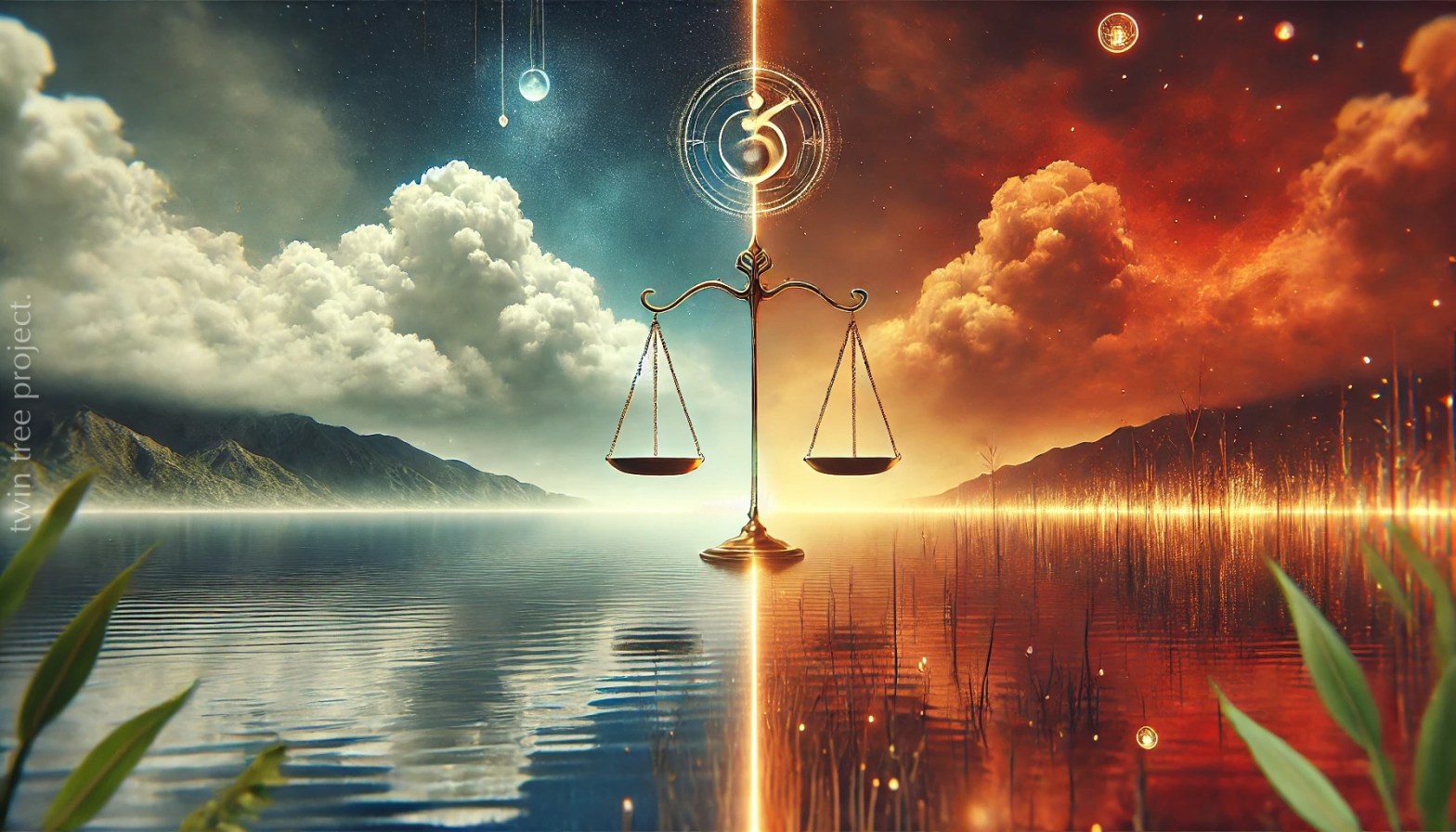
In its truest sense, karma is not a cosmic tool of revenge. It’s not punishment for bad behavior, nor is it a convenient excuse to abandon compassion. Karma, at its core, is about balance. It seeks one thing and one thing only: to restore equilibrium to the energy of the universe.
Karma is intertwined with other concepts like dharma (righteous duty) and samsara (the cycle of existence), which work in harmony to guide the flow of energy. Karma does not seek to punish or destroy; its sole purpose is to balance. To correct the chaos that humanity—through unconscious yet deliberate actions—has set into motion. The spiral of imbalance we’ve created fights against the universe’s efforts to restore harmony, and when we misuse or misunderstand karma, we only amplify this resistance.
The misuse of, and spread of misunderstanding about, these topics risks disrupting that balance further—not only in how we interpret the world around us but in how we contribute to it. Nowhere has this misuse been more glaring to me than in the current discourse surrounding U.S. politics, wars, and conflicts around the globe.
These issues are especially evident in the context of recent disasters, such as Hurricane Helene and the fires ravaging LA County, along with the ongoing debates about FEMA’s role and effectiveness. These events, and the conversations surrounding them, are what prompted me to write this post.
Weaponizing Karma, Losing Empathy
What happens when disaster strikes? People turn to social media, media outlets, or conversations to make sense of the chaos. But instead of coming together, these moments are often opportunities for division. Some wield “karma” as a tool of judgment, proclaiming the destruction as deserved. Others take to pointing fingers at those who dare question mainstream narratives, especially in politically charged contexts.
What’s missing in all of this is empathy.
Empathy is not just about feeling bad for someone else’s suffering. It’s the ability to understand, to see beyond the surface of another’s pain, fear, or frustration. It’s grounded in emotional intelligence—the kind that discerns when facts are irrelevant compared to the immediate human need for connection and compassion.
In recent debates about FEMA’s response, for example, there’s a tendency to focus on political incompetence, theoretical conspiracies, or ideological divides rather than the reality: real people are suffering. Yes, facts and accountability matter, but when we use them to attack instead of build understanding, we lose sight of our shared humanity.
This is where the interplay between IQ and EQ comes in.
IQ Without EQ: A Recipe for Disconnect
We live in a society that prizes intelligence—degrees, titles, research, and “proof.” Liberal and academic circles, in particular, have a habit of weaponizing education to belittle others. The right is often labeled as “uneducated” or “ignorant,” as though these terms are the ultimate indictments of character.
But here’s the truth: being educated doesn’t make you wise. Having facts or being “right” doesn’t make you insightful. And IQ, without EQ, is a blunt instrument.
High emotional intelligence allows us to recognize the nuances of human experience. It reminds us that holding information—no matter how true—doesn’t grant you moral superiority. If you can’t engage others with compassion, you’re just as blind as those you seek to judge.
Empathy, discernment, and the ability to connect with others are what turn knowledge into wisdom. Without those, we devolve into echo chambers, where the “educated” mock the “uneducated” and the cycle of division grows.
Righteous Anger and Misplaced Blame
Let’s talk about anger. Not all anger is destructive. There’s a concept in spirituality known as righteous anger—the kind that arises when we witness injustice or see truth suppressed.
But righteous anger is not the same as lashing out. In today’s discourse, there’s a pattern of attacking anyone who challenges mainstream perspectives as a “conspiracy theorist.” It’s ironic, considering how many so-called conspiracies have been proven true over time. Terms like “conspiracy theorist” have their roots in deliberate discreditation campaigns (looking at you, CIA) and are used to stifle dissent, even when dissent is valid.
True righteous anger seeks to expose injustice without dehumanizing those on the other side. It channels frustration into clarity and action, not blind aggression.
The Interplay of Karma, Truth, and Responsibility
What does karma demand of us in this context? First, it asks us to look inward. It challenges us to examine the energy we put into the world—not just through actions, but through words and intentions. Are we creating harmony, or are we perpetuating cycles of division?
Karma is not only about bad things happening; there is “good karma,” too. In reality, karma is a passive force; it invites accountability. But accountability is not about punishment—it’s about recognizing the consequences of our collective choices, whether those choices manifest as environmental neglect, political corruption, or societal apathy.
And it demands action. Not the kind that seeks to be right for the sake of ego, but the kind that builds bridges, holds systems accountable, and uplifts those in need.
Resources to Deepen Your Understanding of Karma
For those looking to explore the concept of karma more deeply, here are some recommended resources:
Sacred Texts:
• The Bhagavad Gita: A foundational text in Hindu philosophy that delves into karma, dharma, and the nature of existence.
• The Upanishads: Ancient spiritual teachings that explore the interconnectedness of life and the cycle of karma.
• The Dhammapada: A collection of Buddhist teachings on karma, mindfulness, and the path to enlightenment.
Books and Commentaries:
• Karma: What It Is, What It Isn’t, Why It Matters by Traleg Kyabgon: A practical and accessible guide to understanding karma from a Buddhist perspective.
• The Law of Karma: What Goes Around Comes Around by Bruce Reichenbach: A philosophical exploration of karma’s implications in daily life.
• Online Resources and Courses:
• Hindu American Foundation: A detailed overview of karma and dharma in Hindu philosophy.
• Khan Academy: Free educational videos on world religions, including the concepts of karma in Hinduism and Buddhism.
• Coursera: Courses like “Buddhism and Modern Psychology” by Princeton University touch on the relevance of karma in contemporary thought.
Reflective Practices:
Engage in mindfulness practices like meditation or journaling to internalize and reflect on these teachings. Apps like Insight Timer (one of my favorite apps of all time, I highly recommend it!) and Calm often include guided meditations on interconnectedness and mindfulness.
By exploring these resources, readers can gain a richer understanding of karma, its true meaning, and how it applies to their lives.
A Call to Compassion
As we navigate these challenging times, it’s worth asking: What are we contributing to the collective energy of the world? Are we responding to disasters with compassion and clarity, or are we doubling down on division and blame?
Let’s retire the shallow, misused version of karma that absolves us of responsibility or allows us to judge from a distance. Let’s step into a deeper understanding—one that honors empathy, truth, and the shared journey of humanity.
Because in the end, it’s not about being right. It’s about being wise, and it’s about loving one another.
 The Twin Tree Project